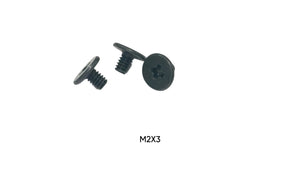
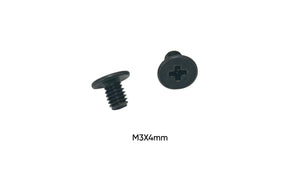
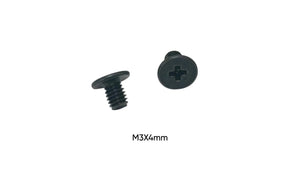
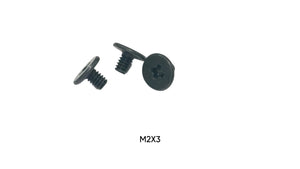
Building or upgrading a PC is an exciting process, but it can come to a screeching halt over the tiniest of components: the M.2 SSD screw. If you're wondering what size screw you need or where to find a replacement for a lost one, you've come to the right place. The most common size for M.2 SSD screws is M2 x 3mm, which refers to an M2 diameter screw with a 3mm length. These small but mighty fasteners are essential for securing your high-speed storage to the motherboard, ensuring a stable and reliable connection for years to come.
What Exactly Are M.2 SSD Screws?
An M.2 SSD screw is a tiny fastener used to hold a gumstick-sized M.2 solid-state drive (SSD) in place on a computer's motherboard. Unlike traditional 2.5-inch SSDs that use larger screws and fit into drive bays, M.2 drives plug directly into a dedicated slot on the motherboard and are secured at the opposite end by a single screw.
This system typically involves two components:
- The Standoff: This is a small hexagonal post that screws directly into the motherboard. It has a threaded hole on top and serves to raise the M.2 SSD to the correct height, preventing it from touching other motherboard components and ensuring it sits parallel to the board.
- The Screw: This is the piece that threads into the top of the standoff, clamping the end of the M.2 drive down and securing it firmly in place.
Without this screw, your M.2 drive would be held in only by the slot connector, risking a loose connection, data corruption, or physical damage from rattling around inside your case.
The Big Question: What Size Are M.2 SSD Screws?
This is the number one question builders have, and for good reason. Using the wrong size can lead to a drive that isn't secure or, worse, damage to the drive or motherboard. While there is a common standard, some variations exist.
The M.2 Screw Size Standard (and Its Exceptions)
The overwhelming standard for M.2 screws is M2. The "M" stands for metric, and the "2" indicates a 2-millimeter nominal outer diameter. The length can vary, but it is most commonly 2mm, 3mm, or 4mm.
While M2 is the standard, some motherboards or laptops, particularly older models, might use a slightly larger M2.5 or even an M3 screw. However, this is quite rare for M.2 slots. If an M2 screw feels far too small for the hole, you might have one of these exceptions. It's a good idea to always consult your motherboard manual first.
Understanding Screw Dimensions
When you see a screw listed as "M2 x 4mm," it's a simple code to read:
- M2: This refers to the threading and diameter of the screw. It's a standard 2mm metric screw.
- 4mm: This is the length of the threaded portion of the screw in millimeters.
The length needed depends on the height of your standoff and the thickness of your M.2 SSD's end notch. A screw that is too short won't engage the standoff threads, while one that is too long might bottom out before securing the drive.
Common M.2 Screw Sizes Compared
Here’s a quick comparison table of the most common sizes you'll encounter.
| Screw Size | Common Use Case | Notes |
|---|---|---|
| M2 x 2mm | Laptops, low-profile standoffs | Very short, used in tight spaces. |
| M2 x 3mm | Most common desktop motherboards | This is the de facto standard PC builders will encounter. |
| M2 x 4mm | Desktop motherboards, some custom builds | When a bit of extra length is needed. A reliable option like these M2 x 4mm screws for SSD mounting can be a lifesaver. |
| M3 x 6mm | NOT for M.2 slots; used for 2.5" SSDs/HDDs, audio connectors | Included for comparison. Noticeably larger than M2. For instance, these M3 x 6mm screws for XLR connectors are much too large for an M.2 slot. |
How to Install an M.2 SSD: A Step-by-Step Guide
Installing an M.2 drive is one of the easiest parts of a PC build, as long as you have the right parts. Here’s how to do it correctly.
- Consult Your Manual: Before you begin, check your motherboard manual to locate the M.2 slots and identify which standoff position to use. M.2 drives come in different lengths (2242, 2260, 2280, 22110), and you must move the standoff to the hole that corresponds to your drive's length (most consumer drives are 2280).
- Install the Standoff: If it’s not already installed, screw the brass or silver standoff into the correct hole on the motherboard. You can usually do this by hand, but a small nut driver or pliers can help snug it up. Don't overtighten!
- Insert the M.2 SSD: Hold the M.2 drive by its edges. Insert the connector end into the M.2 slot at a 30-degree angle. It should slide in smoothly.
- Press the Drive Down: Gently press the end of the M.2 drive down so it sits flat and the semi-circular notch at the end lines up with the hole in the standoff.
- Secure with the Screw: Using a small Phillips #0 or #1 screwdriver, carefully thread your M.2 screw into the standoff. Tighten it until it's just snug. Do not overtighten! You only need enough pressure to hold the drive securely in place.
Help! I Lost My M.2 SSD Screw. What Now?
It’s a tale as old as time. You unbox your motherboard, set it aside, and when it’s time to install your NVMe drive, the tiny baggie with the standoff and screw is nowhere to be found. Don't panic! You have a few options.
First, double and triple-check the motherboard box. These screws are often pre-installed on the motherboard itself or tucked away in an anti-static bag labeled "M.2."
If it's truly gone, your best bet is to source a proper replacement. While some forums might suggest using tape or non-conductive shims, these are temporary, risky solutions that can fail over time due to heat cycles inside the case. A secure mechanical connection is always best.
Expert Tip: Never install an M.2 SSD without a screw. The connection can easily come loose during transport or even from vibrations, leading to sudden system shutdowns and potential data loss. It’s not worth the risk.
Where to Buy Replacement M.2 SSD Screws
When you need a replacement, you need the right part, and you need it fast. At Tech Spare Warehouse, we specialize in having the exact fasteners and components that builders and technicians need. You don't have to buy a massive, expensive kit with 100 screws you'll never use.
Here are our top recommendations for getting your build back on track:
- For Most SSD Installations: The single most common replacement you'll need is an M2 screw. We highly recommend our M2 x 4mm Phillips Flat Head Screws for SSD Mounting. They provide excellent compatibility and just enough length for a secure fit on nearly any motherboard.
- For General Electronics and PC Building: If you do a lot of projects, having a versatile set on hand is invaluable. Our M2 Phillips Flat Head Machine Screws (Multiple Lengths & Finishes) kit is perfect for M.2 drives and many other small electronics repairs.
- For Apple MacBook Pro Users: Apple uses proprietary Torx screws. If you're upgrading a MacBook, you need a specific set like our 40-piece Hard Drive Screw Set for MacBook Pro to do the job right.
- For Raspberry Pi and Other Projects: If you're a hobbyist, you may need similar but different screws. For instance, securing a Raspberry Pi 5 case often requires M2.5 x 8mm machine screws, which are slightly larger in diameter than the M.2 standard.
Common Mistakes to Avoid During M.2 Installation
Avoid these common pitfalls to ensure a smooth and successful installation:
- Forgetting the Standoff: Screwing the M.2 drive directly to the motherboard will bend and damage the drive. Always use the standoff.
- Over-tightening the Screw: This is a major one. Cranking down on the screw can crack the SSD's printed circuit board (PCB) or strip the standoff's threads. Tighten until just snug.
- Using the Wrong Standoff Position: This puts physical stress on the drive and the M.2 slot. Make sure the standoff is in the hole that matches your drive's length (e.g., the "80" position for a 2280 drive).
- Losing the Screw Inside the Case: These screws are tiny! A magnetic-tipped screwdriver can be a lifesaver. If you drop it, make sure you find it before powering on your PC to prevent short circuits.
- Forcing the Drive In: The M.2 drive should slide into the slot with minimal force. If it doesn't fit, check that you have the keying aligned correctly and are inserting it at a slight angle.
Your Build Deserves the Right Parts
That tiny piece of metal is the only thing holding your super-fast, expensive M.2 SSD in place. Using the correct M.2 SSD screws isn't just a recommendation; it's a requirement for a stable, long-lasting PC build. From ensuring a solid data connection to preventing physical damage, taking a moment to use the right fastener saves a world of trouble down the road. Whether you're building a new gaming rig or just upgrading your storage, don't let a lost screw derail your progress. For all your hard-to-find fasteners and spare parts, be sure to check out the full catalog at Tech Spare Warehouse.
Frequently Asked Questions
What size are M.2 SSD screws?
The most common M.2 SSD screw size is M2, which has a 2mm diameter. The length is typically 3mm, so the full standard size is often written as M2 x 3mm. However, 2mm and 4mm lengths are also used.
Can you install an M.2 SSD without the screw?
No, you should never install an M.2 SSD without its screw. The screw is essential for holding the drive securely in the slot. Without it, the drive can come loose, leading to connection issues, data loss, or even physical damage.
Are all M.2 screws the same?
While the vast majority of motherboards and M.2 SSDs use a standard M2 screw, there are rare exceptions that might use an M2.5 or M3 screw. It is always best to consult your motherboard manual to be certain.
What is an M.2 standoff?
An M.2 standoff is a small metal post that screws into the motherboard. Its purpose is to lift the M.2 SSD to the correct height, ensuring it remains parallel to the motherboard and doesn't make contact with other components. The M.2 screw then fastens into the top of this standoff.
What screwdriver do I need for an M.2 screw?
You typically need a small Phillips head screwdriver, usually a size #0 or #1. Using a screwdriver with a magnetic tip is highly recommended, as it makes handling the tiny screw much easier and helps prevent dropping it inside your PC case.
Does it matter which M.2 slot I use?
Yes, it can matter. Often, one M.2 slot on a motherboard has a direct CPU connection for the best performance, while others may share bandwidth with SATA ports. Check your motherboard manual to identify the primary (fastest) slot and any bandwidth-sharing rules.
I lost my M.2 screw, where can I get another?
You can get replacement M.2 screws from specialized electronics suppliers like Tech Spare Warehouse. You can often buy them individually or in small packs, such as a dedicated M2 screw for SSD mounting, so you don't have to purchase a large, unnecessary kit.