Quick answer
- An M3 screw is a metric fastener with a 3-millimeter nominal diameter, positioned between the smaller M2.5 and larger M4 sizes in the metric screw sizing system.
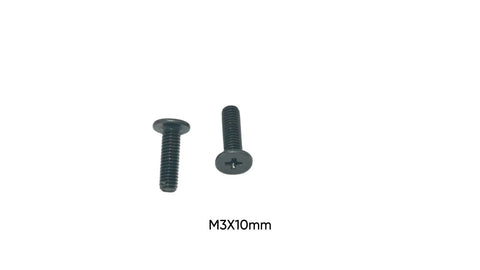
An M3 screw is a metric fastener with a 3-millimeter nominal diameter, positioned between the smaller M2.5 and larger M4 sizes in the metric screw sizing system. This specific size appears frequently in electronics manufacturing, computer assembly, and mechanical devices where moderate holding strength is required without excessive bulk.
Individuals search for M3 screw identification information when they need to replace a single lost fastener, verify compatibility before purchasing hardware, or understand whether an existing screw matches their application requirements. Accurate identification prevents ordering incorrect sizes and ensures proper fit.
What Defines an M3 Screw
The "M" prefix indicates metric threading, distinguishing these screws from imperial sizes like 6-32 or 8-32. The number "3" specifies the nominal outer diameter of the screw's threads in millimeters. When measured with precision calipers, an M3 screw's thread diameter should read approximately 3.0mm, with minor variations due to manufacturing tolerances.
Thread pitch for standard M3 screws measures 0.5mm, representing the distance between adjacent thread peaks. This specification means one complete clockwise rotation advances the screw exactly 0.5mm deeper into the threaded hole. The combination of 3mm diameter and 0.5mm pitch creates the unique thread profile that defines an M3 screw.
The minor diameter—the measurement across the screw's core beneath the threads—typically measures around 2.5mm for M3 screws. This dimension affects the screw's tensile strength and determines the appropriate drill bit size for creating threaded holes.
Why Accurate M3 Screw Identification Matters
Using an incorrectly sized screw in place of an M3 can cause immediate damage. An M2.5 screw (2.5mm diameter) will fit loosely in an M3 hole, providing inadequate clamping force and allowing components to shift or vibrate loose. Conversely, forcing an M3.5 or M4 screw into an M3 hole strips the threads and permanently damages the mounting point.
Imperial screws with similar diameters create confusion. A 6-32 screw measures approximately 3.5mm in diameter—close enough to an M3 to appear compatible at first glance. However, the different thread pitch (32 threads per inch versus M3's 0.5mm pitch) prevents proper engagement, leading to cross-threading and stripped holes.
Material compatibility also depends on correct screw identification. An M3 screw designed for metal-to-metal applications may have different thread characteristics than one intended for plastic. Using the wrong type can crack plastic components or fail to achieve adequate holding strength in metal.
Measurement Techniques for Verification
Digital calipers provide the most accurate method for measuring M3 screw diameter. Open the caliper jaws and position them across the screw's threads at the widest point, perpendicular to the screw's axis. A reading between 2.95mm and 3.05mm confirms M3 sizing, accounting for manufacturing tolerances and measurement error.
Thread pitch measurement requires either a thread pitch gauge or careful manual counting. Thread pitch gauges feature multiple blades with different tooth spacings; the blade that fits perfectly into the screw's threads indicates the pitch. For manual verification, mark a starting thread, count exactly 10 threads forward, and measure the distance—it should equal 5mm for an M3 screw with 0.5mm pitch.
Length measurement varies by head type. Pan head, button head, and round head screws measure from the underside of the head to the tip. Flat head (countersunk) screws measure from the top of the head, as the entire screw sits at or below the mounting surface. Always use millimeter measurements for metric screws.
Typical M3 Screw Applications
Computer hardware uses M3 screws for motherboard mounting, expansion card brackets, and drive bay installations. These applications typically require lengths between 5mm and 10mm, with pan or button heads being most common. The screws thread into brass standoffs or directly into threaded holes in the computer case.
Consumer electronics including external hard drives, routers, and audio equipment employ M3 screws for case assembly and internal component mounting. The screw's size provides adequate strength for devices weighing several pounds while maintaining compact dimensions suitable for modern slim-profile designs.
Industrial control panels, instrumentation, and automation equipment frequently specify M3 screws for terminal blocks, DIN rail mounting, and component retention. These environments often require stainless steel M3 screws for corrosion resistance, particularly in food processing or chemical manufacturing facilities.
Head Configurations and Drive Types
Pan head M3 screws feature a flat bearing surface with a slightly domed top, providing good clamping force distribution across thin materials. The head height typically measures 2mm to 2.5mm, creating a low profile suitable for most applications. Phillips, slotted, and hex socket drives are all common for pan head M3 screws.
Socket head cap screws in M3 size offer the highest strength option, with a cylindrical head and hex socket drive. The head diameter measures approximately 5.5mm, and the height reaches 3mm, allowing for high installation torque. These screws suit applications requiring significant clamping force or frequent assembly and disassembly.
Flat head (countersunk) M3 screws create flush surfaces when installed in properly countersunk holes. The head angle typically measures 90 degrees, matching standard countersink bits. This style prevents snagging and improves aesthetics but requires additional hole preparation compared to pan or button heads.
Common Identification Mistakes
Confusing M3 screws with M2.5 screws occurs frequently because the 0.5mm diameter difference is difficult to judge visually. Side-by-side comparison helps, but measurement remains the only reliable verification method. M2.5 screws measure 2.5mm in diameter and typically use 0.45mm thread pitch.
Mistaking imperial 6-32 screws for M3 screws creates serious problems. The 6-32 screw's 3.5mm diameter appears similar, and both sizes commonly appear in electronics. However, the completely different thread pitch makes them incompatible. Always verify thread pitch, not just diameter.
Assuming all M3 screws have the same thread pitch leads to errors. While 0.5mm pitch is standard, fine-pitch M3 screws with 0.35mm pitch exist for specialized applications. These fine-pitch screws provide more threads per unit length but are uncommon in consumer electronics.
Material and Coating Considerations
Steel M3 screws offer excellent strength and are the most economical option for general applications. Zinc plating provides basic corrosion resistance adequate for indoor electronics. Black oxide coatings reduce glare and offer minimal corrosion protection, primarily serving aesthetic purposes.
Stainless steel M3 screws resist corrosion in humid or outdoor environments. The material's non-magnetic properties benefit installations near sensitive electronics or in medical equipment. However, stainless steel is softer than hardened steel, requiring more careful installation to avoid thread damage.
Brass M3 screws provide electrical conductivity and corrosion resistance, making them suitable for grounding applications and marine environments. The soft material requires gentle installation torque to prevent thread stripping. Brass screws are typically more expensive than steel alternatives.
Selecting Appropriate M3 Screw Length
Length selection depends on the total thickness of materials being joined plus the required thread engagement depth. For M3 screws, minimum thread engagement should equal 1.5 times the screw diameter (4.5mm), though 6mm or more provides better security.
Calculate required length by adding material thickness and desired thread engagement, then selecting the next available standard length. For example, joining a 2mm bracket to a component requiring 6mm thread engagement needs an 8mm screw minimum. Choosing a 10mm screw provides margin for error.
Screws that are too long risk damaging components beneath the mounting surface or bottoming out in blind holes before achieving proper clamping force. Screws that are too short may not engage sufficient threads, leading to weak connections that loosen under vibration or stress.
Replacement Screw Compatibility
Aftermarket M3 screws manufactured to ISO metric standards will function identically to original equipment screws when all specifications match. The critical parameters are diameter (3mm), thread pitch (0.5mm), and length. Material and finish may vary without affecting mechanical performance.
Head style substitution is possible if the replacement head fits within available clearance. A pan head M3 screw can replace a button head M3 screw of the same length, though the head profile differs slightly. Ensure the drive type matches available tools or be prepared to use different screwdrivers.
Thread-locking compounds can compensate for slightly worn threads or prevent loosening in vibration-prone applications. Use removable-strength formulas to allow future disassembly. Apply a small drop to the threads before installation, avoiding excess that could prevent proper seating.
Conclusion
Accurate M3 screw identification requires measuring both diameter and thread pitch to distinguish this size from similar metric and imperial fasteners. Understanding the 3mm diameter and 0.5mm pitch specifications enables confident screw selection for electronics repairs and assemblies. Proper measurement techniques and awareness of common identification errors prevent the component damage and assembly failures that result from using incorrect fasteners.