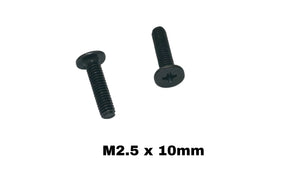
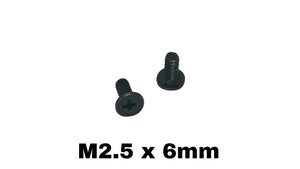
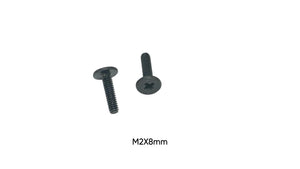
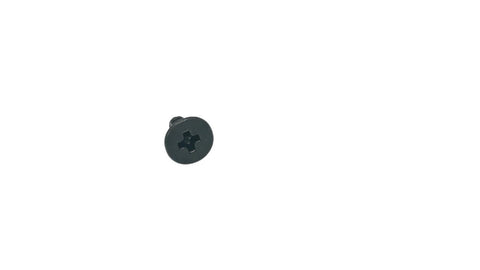
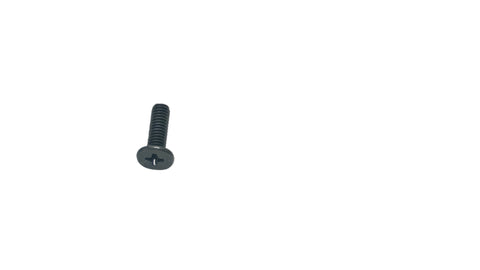
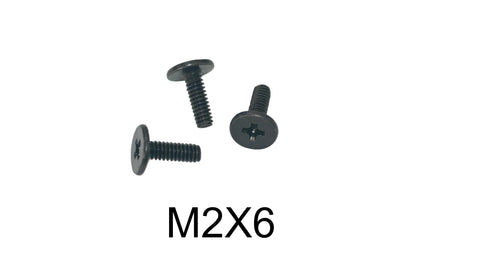
Quick answer: most hobby-grade RC cars use metric screws. M3 is by far the most common size on 1/10-scale cars and trucks. Larger 1/8-scale and bigger models use more M4, while 1/18 to 1/24 minis lean on M2 and M2.5. Flat (countersunk) heads go through the bottom of the chassis so it slides over the ground. Button or cap heads hold most other parts.
RC cars lose screws constantly. A crash, a loose shock mount or a rebuild on a dusty bench, and something is missing. Here is how to work out what you need without taking the car apart twice.
Typical screw sizes by scale
| Scale | Most common sizes | Typical use |
|---|---|---|
| 1/24 to 1/18 | M2, M2.5 | Mini crawlers, micro buggies, bodies and electronics |
| 1/12 to 1/10 | M3 (some M2.5 and M4) | Chassis, suspension, shock mounts, electronics |
| 1/8 | M3 and M4 | Chassis and suspension; M4 on heavier mounts |
| 1/5 and larger | M4, M5 and up | Large-scale chassis and engines |
These are general patterns. Some ready-to-run cars use self-tapping screws into plastic, which have a different, sharper thread. Check what came out before ordering.
How to measure a missing screw
- Find a twin. RC cars are usually symmetrical. The same screw almost always exists on the other side.
- Measure the diameter across the threads with calipers: about 2.5mm is M2.5, about 3mm is M3, about 4mm is M4. Our size chart helps here.
- Measure the length. On a flat head, measure the whole screw including the head. On a button or cap head, measure from under the head.
- Note the thread type. Machine screws have fine, even threads and a blunt tip. Self-tappers have coarse threads and a pointed tip.
- Note the drive. Hex (1.5, 2.0 or 2.5mm keys are common) or Phillips.
Flat head vs button head on an RC chassis
- Flat head (countersunk): through the chassis plate from below. They sit flush in countersunk holes so nothing catches on the ground. Our flat head vs pan head guide explains why a pan head won't sit right in those holes.
- Button head: shock towers, bulkheads and electronics trays, where the hole has a flat seat.
- Cap head: places where a hex key needs a deep, strong grip.
Screws into plastic vs metal
Into plastic
- Plastic threads strip easily. Turn the screw backwards until you feel it drop into the existing thread, then tighten. This stops it cutting a new thread each time.
- Stop as soon as the screw is snug. Overtightening crushes the boss.
- Don't use threadlocker in plastic. Some types can weaken certain plastics.
Into metal
- A small drop of medium-strength threadlocker stops vibration loosening screws in metal parts such as motor mounts and metal bulkheads.
- Pinion grub screws especially benefit from threadlocker.
Choosing length when you upgrade parts
Aluminium upgrade parts are often thicker or thinner than the plastic originals. When you swap a part, re-check the screws: a screw that bottomed out before might now be too short, or poke through into something else. Aim for at least three full threads engaged.
Build a spares box
A small divided box with these covers most trackside repairs on a 1/10 car:
- M3 flat heads in 8, 10, 12 and 14mm for the chassis.
- M3 button heads in a few lengths.
- M3 nylon-insert lock nuts and a few washers.
- The right hex and Phillips drivers. Our screwdriver bit guide matches bits to screw sizes.
Our hobby and DIY screws collection includes M3 flat heads in 8, 10, 12 and 14mm for RC chassis, plus screws for 3D printers, keyboards and model trains. See also our 3D printer screws guide, as many printers share the same M3 sizes.
Hex vs Phillips on RC cars
Hobby-grade kits mostly use hex (Allen) socket screws because a hex key grips firmly and resists stripping. Ready-to-run cars and older designs often use Phillips. When you replace Phillips screws in a high-wear spot, use the correct bit and firm downward pressure. Our screwdriver bit guide shows which Phillips size suits each screw.
Stainless, steel or aluminium?
- Hardened steel: the standard for chassis and suspension. Strong and inexpensive.
- Stainless: resists corrosion if you run in wet conditions, but is usually softer than hardened steel.
- Aluminium: light and colourful, best kept to low-stress cosmetic parts such as bodies and wings.
Whichever you choose, the size and length matter most. Measure first, then order.
Shop by size: M3 screws and M2.5 screws.
FAQ
What size screws do RC cars use?
Mostly M3 on 1/10 scale, M4 on larger scales, and M2 to M2.5 on minis. Measure to confirm.
Are RC car screws metric?
Most hobby-grade cars use metric screws. Some older or US-designed models use imperial sizes such as 4-40, so measure the thread before ordering.
Why do the screws in my chassis keep coming loose?
Vibration. Use medium threadlocker on metal threads, and replace screws with rounded heads.
Can I replace a self-tapping screw with a machine screw?
Not into the same plastic hole. A machine screw needs a matching thread or a nut.
How long should RC chassis screws be?
Long enough to engage at least three full threads in the part below, but not so long that they hit a moving part or poke through. Measure the stack the screw passes through, including any washers, and check again after swapping to thicker or thinner aftermarket parts.
Should I use washers on RC screws?
Under button heads on plastic parts, a thin washer spreads the clamping and helps prevent cracking. Flat heads in countersunk holes don't take washers.